

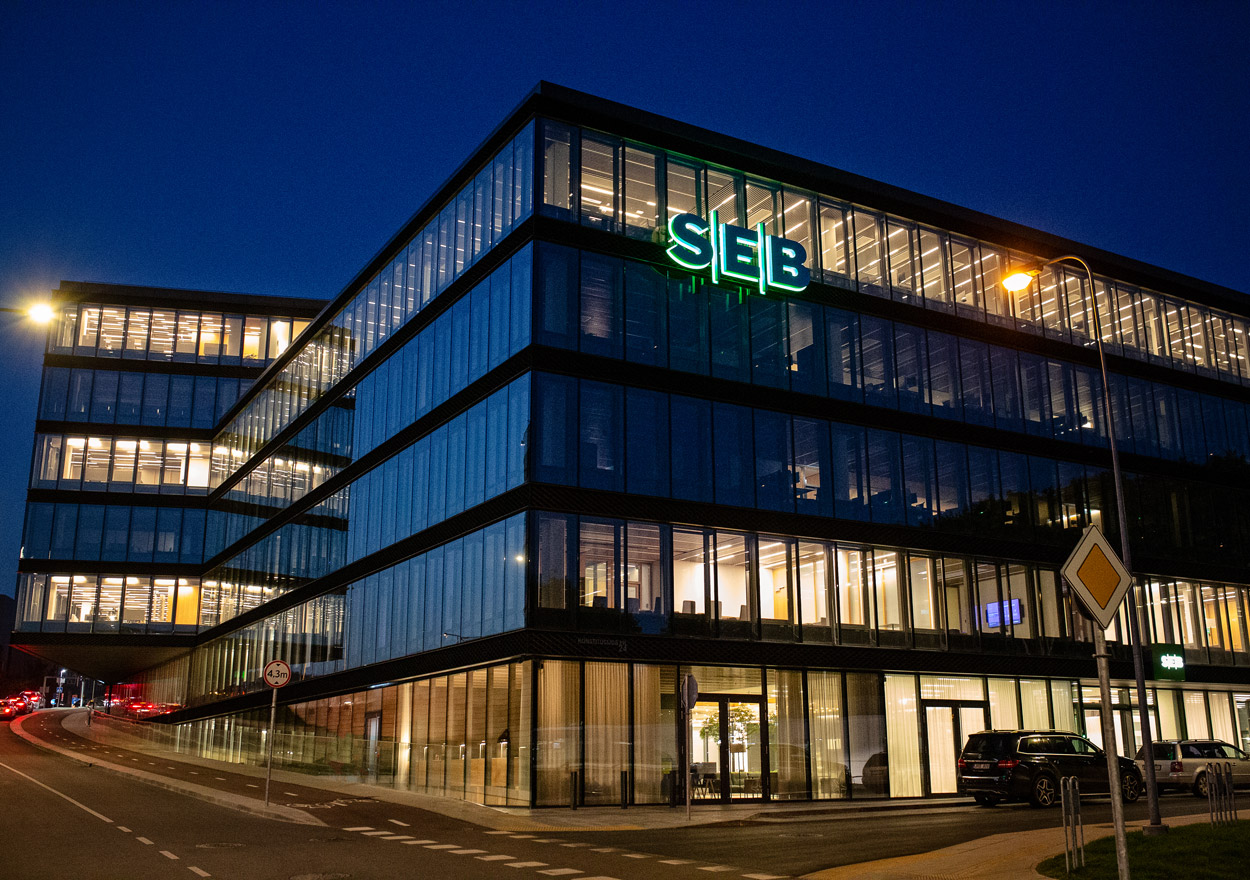
SEB
We helped SEB unify QA practices across five payments teams, replacing fragmented testing strategies with a modern automation framework that cut delivery bottlenecks and caught bugs earlier.

Highlights
cheaper bug detection at component level vs. production
end-to-end tests covering the most critical business flows
reduction in test development time
Unified five teams under one QA strategy
Five development teams aligned on shared automation standards, eliminating duplicated tests and inconsistent tooling.
Faster releases, fewer environment blocks
Component-level testing freed teams from fragile shared environments. Integration issues got caught earlier.
Background
SEB is a major Nordic and Baltic bank serving millions of customers across Northern Europe. The bank was building a global payments platform to modernize how it handles transactions.
The platform’s user-facing domain was developed by five separate teams. Each team had its own testing strategy, tools, and practices. Integration testing relied on shared UI-driven environments where one team’s issue blocked everyone else.
Softeta has partnered with SEB since mid-2022. We brought development and QA expertise to the payments domain, designed a unified test automation framework, and coached SEB’s engineers to own it themselves. The work covers QA architecture, CI/CD integration, component testing, and end-to-end automation across critical payment flows.
Challenges
Fragmented testing practices
Five teams meant five different approaches. Tests were duplicated across teams. Quality was inconsistent. Integration issues surfaced late in the release cycle.
Fragile shared environments
Integration testing depended on UI-driven shared setups. When one team broke something, everyone waited. Environment problems caused delays that rippled across the entire program.
Wrong testing strategy for microservices
Teams relied heavily on end-to-end UI tests. No component-level coverage. No mocked dependencies. Feedback was slow, tests were flaky, and the approach didn’t fit SEB’s microservices architecture.

Solution
Comprehensive assessment
A cross-functional team of QA architects, engineers, and senior developers reviewed SEB’s existing framework, test types, data quality, pipelines, and security practices. We diagnosed root causes before proposing fixes.
Modern QA automation framework
We built a test automation framework using .NET C#, SpecFlow, and xUnit –technologies SEB’s developers already knew. No ramp-up time, no resistance.
Layered test strategy
Heavy UI testing got replaced with component tests using mocked dependencies. A shared cross-team E2E framework eliminated duplication. Tests became faster, more reliable, and better suited to microservices.
CI/CD integration
Tests became part of every pull request. Quality checks ran automatically across services, fitting SEB’s SCRUM and SAFe workflows.
BDD for cross-team clarity
End-to-end scenarios written in business-oriented language. Developers, testers, and stakeholders could all read the test logic.
Centralized test data and security
Test data standardized across services. Secrets removed from Git. Jira stories linked to test tasks so testing happened in the same sprint as feature development.
Knowledge transfer
Softeta coached SEB’s engineers on the new framework. Over time, the bank’s QA team could write their own tests and own the system.
Tech stack


Impact
80% cheaper bug detection
Catching defects in component tests costs a fraction of finding them in E2E or production. Most issues now surface early.
10% reduction in test development time
A single cross-team E2E framework replaced duplicated tests in each team. Less wasted effort, faster delivery.
40 critical end-to-end tests
Covering the most important business flows for 5 delivery teams and 10 other teams that depend on shared functionality.
2 bugs per week caught by E2E safeguards
End-to-end tests still catch issues that slip through earlier stages. A final safety net across business flows.
Releases no longer blocked by environments
Teams can validate services independently. Environment-related delays dropped.
Higher customer satisfaction, lower regulatory risk
Better quality across the platform. Fewer production issues. Reduced compliance exposure.
“We have been working with Softeta since mid-2022. The main goal of our collaboration has been to strengthen our delivery capacity with additional development and testing expertise in the payments domain. The partnership has been very successful – Softeta has been highly responsive to our needs, and we have onboarded skilled and competent consultants through them.”
Nicklas von Wachenfeldt
Head of Payments 2 @ SEB
More success stories
From startups to global enterprises, teams count on us for growth that works
We helped our client build a frontend team from scratch, establish development processes that actually work, and ship a redesigned B2B platform while clearing years of technical debt.
We helped our client cut manual labor by automating their waste material identification and classification process using a custom AI-powered computer vision system.
Looking for a tech partner?
Select your project type and submit the form, or contact us for details.